
Industry Key Highlights
According to TechSci Research report, “India 3D Printer Market – By Region, Competition, Forecast and Opportunities, 2021-2031F”, India 3D Printer Market was valued at USD 15.13 Billion in 2025 and is expected to reach USD 38.94 Billion by 2031 with a CAGR of 17.06% during the forecast period. This remarkable expansion is not merely driven by increased demand but by India’s strategic shift toward advanced manufacturing technologies, government-backed industrial growth programs, educational initiatives, and thriving innovation ecosystems.
Request For Sample Copy of Report For More Detailed Market insight: https://www.techsciresearch.com/sample-report.aspx?cid=10703#requestform
3D printing, once considered an experimental tool, is now gaining mainstream acceptance across diverse sectors such as healthcare, automotive, aerospace, defense, education, and consumer electronics. The emergence of a robust startup ecosystem, deeper integration into educational curricula, and rising R&D investments are establishing 3D printing as an indispensable pillar of Industry 4.0 in India.
Today, from rural prototyping labs to cutting-edge defense R&D facilities, 3D printing is no longer just an option—it is a necessity for innovation, speed, and cost-efficiency.
Browse over XX Market data Figures spread through XX Pages and an in-depth TOC on ” India 3D Printer Market.”@https://www.techsciresearch.com/report/india-3d-printer-market/10703.html
Emerging Trends Shaping the India 3D Printer Market
1. Education Driving Mass Awareness and Skill Creation
One of the most exciting trends in the India 3D printer landscape is its deep integration into academia. Universities and technical institutions are rapidly incorporating 3D printing technologies into their STEM curriculum. Lab-scale 3D printers are now common in engineering departments, architecture labs, and innovation hubs, allowing students to engage in hands-on learning, interdisciplinary research, and national-level competitions.
Over 200 institutes across states like Tamil Nadu, Maharashtra, and Gujarat have certified students through workshops in additive manufacturing, creating a robust pipeline of skilled professionals. As a result, students are filing patents, building prototypes, and contributing to the innovation economy—proof that 3D printing is as much an educational revolution as it is an industrial one.
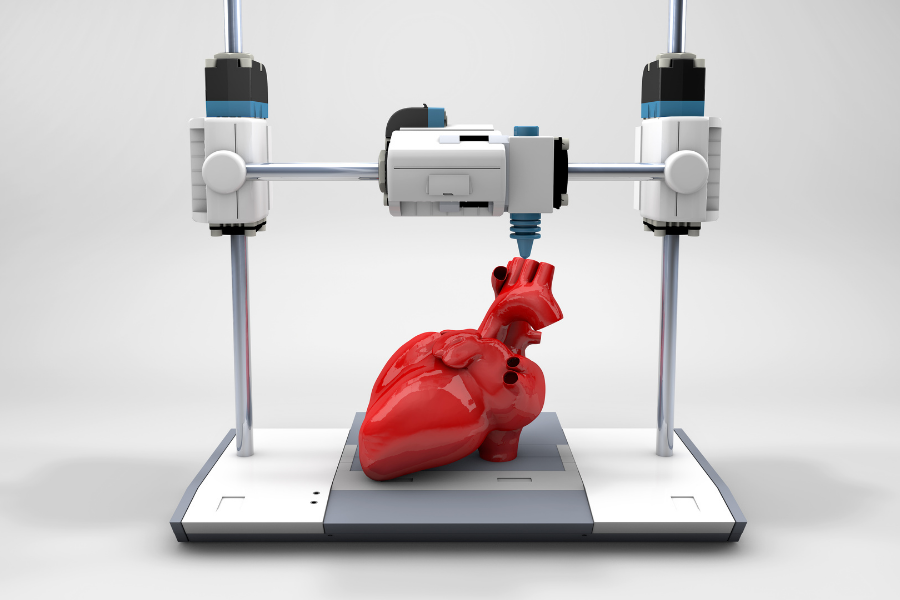
2. Healthcare Revolution Through Additive Manufacturing
The medical sector is emerging as a frontier for 3D printing in India. From custom prosthetics to patient-specific surgical models and dental solutions, 3D printing is reshaping how healthcare providers deliver precision care. Hospitals and medical device manufacturers are leveraging this technology to reduce surgical times, enhance patient outcomes, and improve cost-efficiency.
With materials like bioresorbable polymers and biocompatible metals gaining traction, India’s med-tech sector is seeing a rise in startups and research labs that design bespoke healthcare devices and implants. Regulatory incentives supporting indigenous production further fuel this transformation.
3. Rise of Customized Manufacturing in SMEs
Indian small and medium enterprises (SMEs), especially in regions like Punjab, Uttar Pradesh, and Haryana, are beginning to adopt 3D printing to drive cost savings, speed up prototyping, and offer customized products. With the entry of affordable industrial printers and domestic manufacturers, SMEs are now able to localize their production, reduce time-to-market, and stay competitive in domestic and export markets.
Additive manufacturing empowers these businesses to test designs, produce low-volume batches, and meet the growing consumer demand for personalization without the need for large-scale capital investments in molds or dies.
Market Drivers Accelerating Growth
1. Government-Led Digital Manufacturing Initiatives
Programs such as “Make in India,” Digital India, and Production Linked Incentive (PLI) schemes are fostering a business-friendly environment for the adoption of 3D printing technologies. Government agencies are promoting the localization of production, incentivizing R&D, and offering grants for innovation centers, particularly in sectors like defense, aerospace, and healthcare.
2. Increasing Demand for Prototyping and Product Customization
India’s rising focus on innovation-led product development has led to a boom in rapid prototyping. Startups and R&D labs are leveraging 3D printers to quickly transform ideas into functional models, enabling faster iterations and better design validation. In sectors like consumer electronics, fashion, and automotive, this trend is drastically reducing the product development lifecycle.
3. Material Innovation and Affordability
The evolution of 3D printing materials—from thermoplastics to metals and biocompatible resins—is opening new industry applications. Simultaneously, the falling cost of printers, coupled with greater domestic manufacturing, is improving access for schools, research labs, and enterprises. India’s cost-conscious market is finally finding a balance between affordability and performance.
4. Integration with Industry 4.0 Technologies
3D printing is increasingly being integrated with AI, IoT, and advanced CAD/CAM software, enabling smarter workflows. This convergence allows for remote design iteration, automated monitoring, predictive maintenance, and decentralized manufacturing—essentials for the smart factories of the future.
End-User Spotlight: The Rise of Medical Applications
Among all end-user segments, the medical industry is witnessing the fastest adoption of 3D printing in India. Applications range from orthotics and dental models to complex bioprinted tissues and surgical implants. Personalized patient care has become more accessible with 3D printing’s ability to create custom-fit models that improve surgical precision and reduce operation times.
Additionally, Indian med-tech startups are producing affordable alternatives to imported devices by leveraging additive manufacturing, especially in underserved areas where access to specialized equipment is limited. With increasing regulatory clarity and rising investment in bioengineering, this sector is projected to become one of the largest contributors to India’s 3D printer market.
Regional Growth: North India Leading the Charge
North India, particularly cities like Delhi, Noida, and Gurugram, is spearheading the adoption of 3D printing. This region benefits from:
- High industrial concentration (automotive, electronics, defense)
- Prestigious engineering colleges and research institutes
- Government support through smart manufacturing policies
The rise of startups, advanced prototyping centers, and government-supported innovation labs is rapidly transforming North India into a hotbed for 3D printing technology.
Additionally, state-led skill development programs and industry-academia collaboration in Punjab, Haryana, and Uttar Pradesh are empowering SMEs and academic institutes alike to embrace additive manufacturing.
Future Outlook
India’s 3D printing market is headed toward a future marked by widespread integration across sectors, localized manufacturing ecosystems, and strong export potential. As awareness spreads and technical capabilities improve, additive manufacturing will move from being a specialist tool to a mainstream manufacturing strategy.
Some key future developments include:
- Bioprinting and Organoid Fabrication: Pioneering institutions are exploring bioprinting for regenerative medicine, potentially revolutionizing organ transplants and tissue repair.
- Defense and Aerospace Innovation: As India strengthens its indigenous defense capabilities, 3D printing will become vital in producing mission-critical components with high precision and durability.
- Smart Cities and Infrastructure: With modular and scalable construction technologies, 3D printing can be a game-changer in rapid urban development and low-cost housing.
- Consumer Personalization: From wearable tech to personalized furniture, 3D printing is poised to cater to a generation of consumers demanding tailored experiences.
India is not just adopting 3D printing—it’s shaping how this technology evolves to serve a diverse, dynamic, and ambitious economy.
10 Benefits of the Research Report
- In-depth Market Forecasts (2021–2031) – Detailed projections to help businesses make long-term plans.
- Segmentation by Process, Type, and End User – Actionable insights into customer segments and emerging applications.
- Competitive Benchmarking – Understand your position in a growing and competitive market.
- Regional Analysis – Focused insights on the fastest-growing regions including North, West, South, and East India.
- Emerging Trends – Covers breakthroughs such as bioprinting, hybrid manufacturing, and AI-integrated workflows.
- Growth Drivers and Challenges – Evaluates policy incentives, material advancements, and skill development efforts.
- R&D and Innovation Mapping – Highlights active institutions, patent trends, and university-industry partnerships.
- End-User Dynamics – Explores sector-specific adoption rates, particularly in healthcare and aerospace.
- Market Opportunity Assessment – Uncovers potential for investments, exports, and domestic substitution.
- Customizable Insights – Tailored analysis for different stakeholders from SMEs to large enterprises and policymakers.
Competitive Analysis
The India 3D Printer Market is a vibrant landscape featuring a mix of domestic innovators and global powerhouses. Competition is intensifying as more players enter the additive manufacturing value chain, offering everything from desktop printers to high-performance industrial systems.
Customers can also request 10% free customization on this report.
Key Players in the Market:
- Imaginarium Pvt Ltd. – A leader in customized manufacturing and prototyping services across industries.
- Stratasys Ltd. – A global pioneer, bringing industrial-grade 3D printing technology to Indian enterprises.
- Divide By Zero Technologies Pvt Ltd. – Focused on affordable and scalable 3D printer solutions for SMEs and educational institutions.
- Altem Technologies Pvt Ltd. – Offering advanced 3D printing solutions to automotive and aerospace sectors.
- Think3D Pvt Ltd. – One of the fastest-growing service providers, known for its accessible prototyping capabilities.
Indian players are increasingly differentiating themselves through value-added services like design consulting, materials innovation, and training. There’s also a strong trend of partnerships between tech companies, educational institutions, and government bodies to ensure widespread adoption and skill-building.
As the market matures, innovation, speed-to-market, customization, and cost-efficiency will determine competitive advantage. Companies that can balance cutting-edge technology with localized, affordable solutions will dominate the future landscape.
Conclusion
The Indian 3D Printer Market stands at the intersection of innovation, industrial digitization, and inclusive growth. With solid government backing, robust startup energy, and increasing adoption across sectors, India is moving rapidly toward becoming a global hub for additive manufacturing.
From classrooms to operating rooms, and from prototyping labs to aerospace factories, 3D printing is enabling a revolution. As affordability improves, materials diversify, and applications expand, the journey of 3D printing in India is only just beginning—but it’s already rewriting the rules of manufacturing, education, and innovation.
Contact US:
Techsci Research LLC
420 Lexington Avenue, Suite 300,
New York, United States- 10170
Tel: +13322586602