
Potassium Soap Insecticides Market driven by rising demand for organic pest control and adoption of sustainable farming practices, 2026-2030.
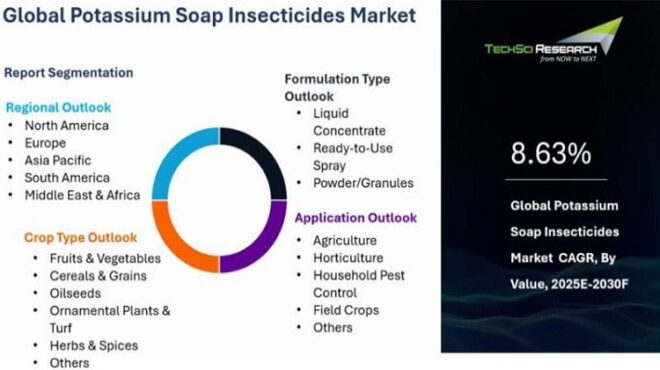
According to the TechSci Research report, “Potassium Soap Insecticides Market – Global Industry Size, Share, Trends, Competition Forecast & Opportunities, 2030F”, the Global Potassium Soap Insecticides Market was valued at USD 8.53 million in 2024 and is projected to reach USD 14.04 million by 2030, registering a CAGR of 8.63% during the forecast period.
The market is gaining traction as farmers and horticulturists increasingly adopt sustainable alternatives to conventional chemical pesticides. Derived from natural fatty acids, potassium soap insecticides effectively control soft-bodied pests such as aphids, whiteflies, and mites while being safe for beneficial insects and pollinators. Growing concerns about soil health, biodiversity loss, and environmental contamination from synthetic pesticides have positioned these insecticides as a critical component of eco-friendly pest management strategies.
Their compatibility with organic farming practices, combined with the ability to degrade without leaving harmful residues, makes them a preferred choice across commercial agriculture, horticulture, and home gardening applications. Rising consumer demand for pesticide-free produce continues to expand the adoption of potassium soap insecticides across multiple agricultural sectors.
Key Market Drivers
Shift Toward Sustainable Agriculture
Sustainable agriculture is at the forefront of driving market growth. Potassium soap insecticides provide an environmentally safe alternative to chemical pesticides, aligning with global trends toward organic farming and reduced chemical use. Farmers are increasingly integrating bio-based solutions into their pest management programs to protect both crop yield and ecosystem health.
Regulatory Support for Bio-Based Pest Control
Global regulatory frameworks are increasingly favoring bio-based pest control solutions over chemical-intensive alternatives. Stricter restrictions on conventional pesticides and rising consumer awareness are creating favorable conditions for the adoption of potassium soap insecticides. These insecticides offer compliance with organic certification standards and are suitable for both domestic and international markets.
Rising Incidence of Pesticide Resistance
The emergence of resistance among common agricultural pests has prompted the search for alternative control methods. Potassium soap insecticides are effective in managing pests resistant to traditional chemical formulations, making them a viable and increasingly necessary solution in integrated pest management (IPM) systems.
Educational Initiatives and Market Awareness
Agricultural cooperatives, extension programs, and agritech platforms are actively educating farmers about the benefits of potassium soap insecticides. Awareness campaigns highlighting their eco-friendly nature, ease of application, and compatibility with organic farming practices have significantly accelerated market penetration.
Product Innovation and Formulation Advances
Recent innovations in potassium soap insecticides include combining them with essential oils, botanical extracts, or microbial formulations to enhance efficacy. These developments create more potent, long-lasting pest control solutions and broaden the product’s appeal to both smallholder farmers and commercial growers. The availability of eco-labeled and certified organic insecticides in retail and online platforms is also facilitating the transition to safer pest management practices.
Growth Opportunities
Expansion of Bio-Based Pesticide Blends
The development of bio-based pesticide blends integrating potassium soap with other natural agents offers significant growth potential. These blends improve effectiveness, extend residual activity, and cater to a wider range of pest species. Such innovations are likely to attract both commercial farmers and hobbyists seeking efficient, environmentally safe alternatives.
Organic Agriculture in Emerging Economies
Emerging markets in Asia-Pacific, Latin America, and Africa are witnessing rapid growth in organic agriculture. Farmers in these regions are increasingly adopting potassium soap insecticides to meet regulatory requirements and cater to the growing demand for residue-free produce.
Collaboration and Government Initiatives
Partnerships between agritech companies and government bodies are facilitating the promotion of sustainable pest control methods through subsidies, training programs, and awareness campaigns. These initiatives are expected to further boost the adoption of potassium soap insecticides in both developed and developing markets.
Urban and Home Gardening Applications
The rise in urban agriculture, rooftop gardens, and home gardening presents additional opportunities. Consumers increasingly prefer non-toxic, biodegradable solutions for pest control in residential and community gardens. Potassium soap insecticides, with their minimal environmental impact, are well-positioned to meet this demand.
Market Segmentation
By Application
The horticulture segment is the fastest-growing application area for potassium soap insecticides. This growth is driven by rising consumer preference for chemical-free products, especially in urban and home gardening settings. Ornamental plants, lawns, and gardens are particularly susceptible to soft-bodied pests like aphids, whiteflies, and spider mites, against which potassium soap insecticides are highly effective.
The adoption of these insecticides in horticulture is further reinforced by:
- Growing awareness of environmental sustainability
- Expansion of organic gardening practices
- Regulatory restrictions on chemical pesticide use
By Formulation
The market includes liquid and powder formulations, with liquid formulations dominating due to ease of application and rapid pest control. Innovations in concentrated liquid formulations improve coverage, penetration, and long-term effectiveness, enhancing adoption among both small-scale and commercial users.
By Crop Type
Potassium soap insecticides are used across multiple crops, including vegetables, fruits, ornamental plants, and turf. The flexibility to target pests without harming non-target species makes them ideal for diverse cropping systems.
Browse over XX market data Figures spread through XX Pages and an in-depth TOC on “Global Potassium Soap Insecticides Market”
https://www.techsciresearch.com/report/potassium-soap-insecticides-market/27492.html
Regional Analysis
Asia-Pacific: Fastest-Growing Market
Asia-Pacific is expected to remain the fastest-growing region for potassium soap insecticides due to:
- Rapid urbanization and expansion of home gardening
- Increasing awareness of sustainable agricultural practices
- Rising demand for organic and residue-free food products
Countries such as India, China, and Southeast Asia are at the forefront of adopting eco-friendly pest control methods. Smallholder farmers increasingly prefer potassium soap insecticides for cost-effective, safe pest management. Government programs promoting organic agriculture, coupled with stricter regulations on synthetic pesticides, are further supporting growth.
The expansion of urban agriculture and landscaping in Asia-Pacific also drives adoption, as consumers seek safer options for managing pests in gardens and green spaces.
North America and Europe
North America and Europe represent mature markets for potassium soap insecticides, driven by strong regulatory frameworks, widespread adoption of IPM, and growing consumer preference for organic produce. European compliance standards, such as REACH, have encouraged the shift to bio-based pest control solutions, while North America sees strong demand from commercial horticulture and home gardening sectors.
Latin America and Middle East & Africa
Emerging markets in Latin America and the Middle East & Africa are increasingly exploring potassium soap insecticides as alternatives to conventional pesticides. These regions are witnessing growth in organic farming and urban horticulture, presenting opportunities for market expansion.
Market Trends
- Eco-Friendly Pest Control – Rising adoption of biodegradable, non-toxic solutions.
- Integrated Pest Management (IPM) – Potassium soap insecticides as IPM-compatible agents.
- Urban Agriculture Growth – Increased use in home gardening and landscaping.
- Formulation Innovations – Concentrated and blended products enhancing efficacy.
- Organic Certifications – Regulatory support and consumer preference driving adoption.
Future Outlook
The Global Potassium Soap Insecticides Market is poised for strong growth through 2030, driven by sustainability trends, regulatory support, and increasing consumer awareness. Asia-Pacific will continue to lead market expansion, while North America and Europe remain important mature markets.
With technological innovations, formulation advancements, and growing adoption in both agricultural and horticultural applications, potassium soap insecticides are expected to solidify their position as a mainstream, eco-friendly pest control solution worldwide.
Conclusion
Potassium soap insecticides are increasingly recognized as an effective, environmentally safe, and biodegradable alternative to conventional chemical pesticides. Rising awareness about soil health, biodiversity conservation, and consumer demand for organic produce is driving adoption across agriculture, horticulture, and home gardening sectors. Market growth is further supported by government initiatives, regulatory compliance, and product innovations.
As farmers and consumers shift toward sustainable pest management practices, potassium soap insecticides are poised to become a key component of the global eco-friendly pest control market, offering both environmental and economic benefits.
Major companies operating in Global Potassium Soap Insecticides Market are:
BONIDE Products LLC
Corax Bioner Co.
Certis USA L.L.C.
Ecoworm Limited
Kao Corporation
OHP, Inc.
PROMISOL S.A.
SPAA SRL
Vellsam Materias Bioactivas S.L.
Victorian Chemical Company Pty Ltd.
Download Free Sample Report
https://www.techsciresearch.com/sample-report.aspx?cid=27492
Customers can also request for 10% free customization on this report
“The Global Potassium Soap Insecticides Market is expanding due to the increasing demand for pest control solutions in the cannabis industry. As the legal cannabis market grows, the need for effective, non-toxic pest management products becomes more critical. Potassium soap insecticides are gaining popularity in cannabis cultivation because they are organic, safe for use on edible plants, and compliant with regulatory standards for pesticide residue. This shift toward organic pest control methods in cannabis farming is boosting the market demand for potassium soap insecticides, especially in regions where cannabis cultivation is expanding.,” said Mr. Karan Chechi, Research Director of TechSci Research, a research-based management consulting firm.
“Potassium Soap Insecticides Market – Global Industry Size, Share, Trends, Opportunity, and Forecast, Segmented By Crop Type (Fruits & Vegetables, Cereals & Grains, Oilseeds, Ornamental Plants & Turf, Herbs & Spices, Others), By Formulation Type (Liquid Concentrate, Ready-to-Use Spray, Powder/Granules), By Application (Agriculture, Horticulture, Household Pest Control, Field Crops, Others), By Region and Competition, 2020-2030F”, has evaluated the future growth potential of Global Potassium Soap Insecticides Market and provides statistics & information on market size, structure and future market growth. The report intends to provide cutting-edge market intelligence and help decision makers take sound investment decisions. Besides, the report also identifies and analyzes the emerging trends along with essential drivers, challenges, and opportunities in Global Potassium Soap Insecticides Market.
Contact
TechSci Research LLC
420 Lexington Avenue, Suite 300,
New York, United States- 10170
Tel: +1-332-258-6602
Email: sales@techsciresearch.com
Website: www.techsciresearch.com