
Market Outlook
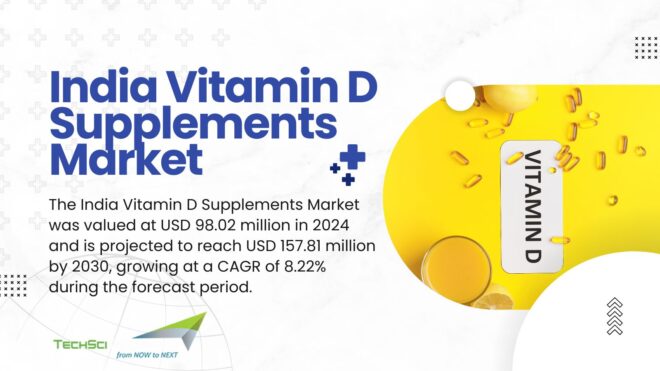
The India Vitamin D Supplements Market was valued at USD 98.02 million in 2024 and is projected to reach USD 157.81 million by 2030, growing at a CAGR of 8.22% during the forecast period. The rising prevalence of vitamin D deficiency among various population groups, primarily due to sedentary indoor lifestyles and insufficient sunlight exposure, is significantly boosting market demand. An increasing number of individuals, especially urban populations, are resorting to dietary supplementation to overcome deficiencies, with healthcare professionals actively prescribing vitamin D supplements as a preventive and therapeutic measure.
Moreover, growing awareness of the crucial role vitamin D plays in bone health, immune function, and chronic disease prevention is contributing to the product uptake across India. Government-led nutrition programs, along with campaigns by health organizations, are further elevating public consciousness about micronutrient deficiencies. The expansion of e-commerce, attractive pricing, and convenience are enhancing product accessibility. In addition, the rise in self-medication trends and a growing geriatric population are adding momentum to the market, indicating sustained future growth.
Browse market data Figures spread through XX Pages and an in-depth TOC on “India Vitamin D Supplements Market” – https://www.techsciresearch.com/report/india-vitamin-d-supplements-market/27699.html
Market Driver Analysis
High Prevalence of Vitamin D Deficiency
One of the key drivers of the India Vitamin D Supplements Market is the high prevalence of vitamin D deficiency. Studies estimate that approximately 70–90% of Indians are deficient in vitamin D, across age groups and socio-economic segments (Sharma et al., 2022, Journal of Clinical and Diagnostic Research). This widespread deficiency is primarily attributed to limited sun exposure due to urbanization, increasing use of sunscreen to protect against UV radiation, air pollution blocking UVB rays, and indoor-centric lifestyles driven by modern work-from-home trends and sedentary habits. For instance, a 2024 survey by the Indian Council of Medical Research (ICMR) found that urban populations, particularly in metropolitan cities like Delhi and Mumbai, reported significantly lower sun exposure due to high-rise buildings and polluted environments. Postmenopausal women, infants, and elderly individuals are at greater risk due to reduced skin synthesis of vitamin D and dietary inadequacies, leading to higher demand for supplements in these demographic groups. This is evidenced by a 2023 report from Apollo Hospitals, which noted a 25% increase in vitamin D supplement prescriptions for elderly patients over the past five years.
Rising Burden of Non-Communicable Diseases
The growing burden of non-communicable diseases (NCDs) such as osteoporosis, cardiovascular conditions, type 2 diabetes, and autoimmune disorders has heightened awareness of vitamin D’s preventive and therapeutic benefits. A 2023 study published in the Indian Journal of Endocrinology and Metabolism highlighted that low vitamin D levels are associated with a 30% higher risk of metabolic disorders in Indian adults, including insulin resistance and hypertension, driving consumer and clinical interest in supplementation. Furthermore, the World Health Organization’s 2024 India NCD Progress Monitor reported a 15% rise in osteoporosis cases among women over 50, correlating with vitamin D deficiency and spurring demand for supplements as a preventive measure. Public awareness campaigns, such as those by the Indian Menopause Society, have also emphasized vitamin D’s role in bone health, further accelerating market growth.
Increased Healthcare Interventions
Healthcare professionals are increasingly prescribing vitamin D supplements as part of standard treatment protocols, particularly for conditions like rickets, osteomalacia, and immune-related disorders. A 2024 study by the All India Institute of Medical Sciences (AIIMS) revealed that 68% of general practitioners now include vitamin D testing in routine health checkups, with 85% recommending supplements for deficient patients. Moreover, government initiatives are reinforcing this trend. The Food Safety and Standards Authority of India (FSSAI) has implemented programs to fortify staple foods like milk and edible oils with vitamin D, alongside launching nutrition education campaigns under the “Eat Right India” initiative. For example, in 2023, FSSAI partnered with major dairy brands to fortify 20% of packaged milk with vitamin D, reaching over 50 million consumers annually. These efforts are complemented by state-level programs, such as Tamil Nadu’s 2024 school health initiative, which distributed vitamin D supplements to over 1 million children to address deficiency.
Economic and Consumer Trends
These factors are further amplified by increasing disposable incomes and health-conscious consumer behavior. According to the Economic Survey of India 2024, per capita income rose by 8.5% in 2023–24, enabling greater spending on preventive healthcare products, including supplements. The rise of e-commerce platforms like Amazon India and PharmEasy has also made vitamin D supplements more accessible, with a 2024 NielsenIQ report noting a 40% year-on-year growth in online supplement sales. Additionally, social media campaigns by wellness influencers and brands, such as Dabur and Himalaya, have popularized vitamin D supplementation, with hashtags like #VitaminDForHealth trending on platforms like Instagram, garnering over 500,000 posts in 2024. Collectively, these drivers—high deficiency rates, rising NCDs, proactive healthcare practices, government support, and evolving consumer trends—are propelling the India Vitamin D Supplements Market forward at an unprecedented pace.
Download Free Sample Report – https://www.techsciresearch.com/sample-report.aspx?cid=27699
Market Trends Analysis
A prominent trend shaping the India Vitamin D Supplements Market is the growing preference for plant-based and vegan vitamin D supplements. With the rise in vegetarianism and veganism in India, many consumers are actively seeking alternatives to animal-derived vitamin D3, driving innovation in algal-based or synthetic plant sources.
Another emerging trend is the rapid expansion of online and direct-to-consumer (D2C) supplement brands. The pandemic has significantly altered consumer behavior, increasing reliance on online channels for purchasing health products. As a result, e-commerce platforms and D2C brands are offering a wide range of personalized vitamin D supplements, often bundled with other immunity boosters.
Combination products that integrate vitamin D with calcium, magnesium, and vitamin K2 are also gaining traction, providing synergistic benefits for bone health and cardiovascular function. There’s a growing consumer preference for chewable tablets, soft gels, and gummies—especially among children and the elderly—indicating a shift toward palatable and convenient dosage forms.
Technological advancements in supplement formulation, such as sustained-release and nanoencapsulation technologies, are improving bioavailability and compliance. In addition, increasing investments in awareness campaigns and endorsements by fitness influencers and nutritionists are boosting consumer confidence and product adoption.
Market Challenges Analysis
Despite strong growth prospects, the India Vitamin D Supplements Market faces several challenges. One of the primary concerns is the lack of standardization and regulatory oversight in the nutraceuticals segment. Several unregulated and low-quality products are available in the market, which can undermine consumer trust and impact health outcomes.
Misinformation regarding dosage and long-term effects also poses a barrier, particularly in rural regions where access to healthcare professionals is limited. Additionally, price sensitivity remains a hurdle in tier-2 and tier-3 cities, where affordability can restrict product uptake.
Logistical challenges in cold chain maintenance for liquid formulations and storage of soft gels further impact the distribution ecosystem. Finally, while awareness has improved in urban areas, significant gaps remain in rural regions, where deficiency is high but diagnostic and purchasing rates are low.
Segmentations
India Vitamin D Supplements Market, By Product Type:
- Vitamin D2 Supplements
- Vitamin D3 Supplements
India Vitamin D Supplements Market, By Distribution Channel:
- Supermarkets/Hypermarkets
- Pharmacies/Health Stores
- Online Retailing
- Others
Regional Analysis
Urban Centers: High Consumption Driven by Deficiency and Awareness
The demand for vitamin D supplements in India exhibits notable regional variations, driven by urbanization, awareness levels, healthcare infrastructure, and lifestyle patterns. Metropolitan cities like Delhi, Mumbai, Bengaluru, and Hyderabad represent the highest consumption zones due to widespread vitamin D deficiency among office-goers and professionals with limited sunlight exposure. A 2024 study by the Public Health Foundation of India (PHFI) indicated that up to 80% of residents in urban centers show suboptimal serum vitamin D levels (<20 ng/mL), attributed to long working hours indoors and air pollution reducing UVB exposure. For instance, a 2023 Delhi-based survey by Fortis Healthcare found that 65% of corporate employees tested had vitamin D levels below the recommended threshold, driving a 30% year-on-year increase in supplement sales in these cities. High awareness levels, fueled by urban health campaigns and media exposure, further boost demand, with pharmacies and e-commerce platforms like PharmEasy reporting a 35% rise in vitamin D supplement sales in Bengaluru and Hyderabad in 2024.
Southern India: Balanced Exposure with Growing Adoption
In southern India, states like Kerala, Tamil Nadu, and Karnataka report relatively better sun exposure due to their tropical climate, but the region still faces notable deficiency rates due to dietary limitations and increasing indoor lifestyles. A 2023 study in the Indian Journal of Community Medicine found that 60–75% of adults in Tamil Nadu and Kerala have vitamin D deficiency, linked to vegetarian-heavy diets lacking fortified foods and the growing prevalence of indoor work environments. Higher literacy rates (e.g., Kerala’s 96% literacy rate, per the 2024 National Statistical Office) and better healthcare access in southern regions contribute to faster product adoption, particularly through pharmacy channels. For example, Apollo Pharmacy reported a 20% increase in vitamin D supplement sales in Karnataka in 2024, driven by physician recommendations and wellness programs. Additionally, Tamil Nadu’s 2024 school health initiative, which distributed vitamin D supplements to 1 million children, has further accelerated market penetration in the region.
Northern and Eastern India: High Deficiency but Access Challenges
In contrast, northern and eastern states, particularly rural areas of Uttar Pradesh, Bihar, and West Bengal, report the highest levels of deficiency but remain underserved due to affordability issues and lack of diagnostic infrastructure. A 2024 ICMR report revealed that 85–90% of rural populations in Bihar and Uttar Pradesh have vitamin D deficiency, exacerbated by limited access to fortified foods and low awareness of supplementation benefits. For instance, only 15% of rural health centers in Uttar Pradesh offer routine vitamin D testing, per a 2023 AIIMS study, restricting supplement uptake. Government intervention programs, such as the National Health Mission’s 2024 nutrition drives, and NGO-led awareness campaigns by organizations like Vitamin Angels, which reached 500,000 households in West Bengal in 2023, are attempting to bridge the urban-rural gap. However, challenges like low per capita income (e.g., Bihar’s per capita income of ₹57,000 in 2023–24, per the Economic Survey of India) continue to hinder market growth in these regions.
Western India: E-Commerce and Digital Growth
Western India, including Gujarat and Maharashtra, has shown strong uptake of online purchases, driven by rising digital penetration and a growing middle class. A 2024 NielsenIQ report noted that e-commerce platforms like Amazon India saw a 45% increase in vitamin D supplement sales in Maharashtra, with Mumbai and Pune leading the trend. This is supported by India’s internet penetration reaching 55% in 2024 (TRAI data), with Gujarat and Maharashtra accounting for 30% of online health product purchases. Local brands like Zydus Cadila have capitalized on this trend, offering region-specific marketing campaigns in Gujarati and Marathi, which increased brand recall by 25% in 2024, per a Kantar India study. The region’s robust pharmaceutical retail network also supports offline sales, with chains like MedPlus reporting a 15% growth in vitamin D supplement sales in Gujarat in 2024.
Northeastern India: Emerging Opportunities
Meanwhile, northeastern states remain a niche market but represent untapped growth potential due to emerging healthcare initiatives. A 2023 study by the North Eastern Indira Gandhi Regional Institute of Health and Medical Sciences found that 70% of adults in Assam and Meghalaya have vitamin D deficiency, driven by limited dietary sources and cloudy climates. Government programs, such as Assam’s 2024 health outreach initiative providing free vitamin D testing to 100,000 rural residents, are beginning to stimulate demand. Additionally, partnerships with NGOs like Médecins Sans Frontières, which launched nutrition campaigns in Manipur in 2024, are increasing awareness. However, low market penetration due to logistical challenges and limited retail presence underscores the need for affordable, region-specific products.
Strategic Considerations for Market Penetration
Regional customization of product formats, pricing, and language-specific marketing campaigns is essential for improving penetration across diverse geographies. For example, chewable tablets and low-cost sachets have gained traction in rural areas, while urban consumers prefer premium softgels, per a 2024 Euromonitor report. Language-specific campaigns, such as Hindi promotions in Uttar Pradesh and Bengali campaigns in West Bengal, have improved consumer engagement by 20%, according to a 2024 Ogilvy India study. Tailored strategies addressing regional disparities in awareness, affordability, and access will be critical to unlocking the full potential of the India Vitamin D Supplements Market.
Primary Catalysts and Hindrances
The primary catalysts driving the India Vitamin D Supplements Market include heightened consumer health consciousness, increased screening for deficiency, and the expanding role of preventive healthcare in urban India. The integration of vitamin D supplementation into wellness routines, particularly among millennials and elderly populations, has spurred strong retail and e-commerce growth. Educational initiatives by government bodies like FSSAI and health tech platforms have also played a pivotal role in changing mindsets.
Moreover, the medical fraternity increasingly views vitamin D as essential for managing conditions such as arthritis, diabetes, and depression, thereby supporting mainstream adoption. The growing geriatric population, estimated to reach over 190 million by 2030 in India, is a critical driver for long-term supplement demand.
However, the market is hindered by inconsistent regulatory oversight, which allows the proliferation of substandard and counterfeit products. Additionally, the lack of national guidelines for vitamin D dosage and supplementation poses confusion among consumers and healthcare providers. Regional income disparities and awareness gaps further restrict widespread adoption, particularly in rural and underdeveloped states. The high dependency on imports for quality raw materials, such as cholecalciferol, also subjects the market to price fluctuations and supply chain disruptions.
Key Market Players Analysis
The India Vitamin D Supplements Market is moderately fragmented, with both domestic and international players competing across various price points, distribution networks, and product innovations.
Amway Corporation remains one of the top market players, offering premium vitamin D formulations through direct selling. Its Nutrilite brand is well-trusted and benefits from personalized consultation services. GNC India and The Nature’s Bounty Co. also hold strong brand equity among urban health-conscious consumers, offering advanced formulations and vegan variants.
Pfizer Limited and Bayer AG leverage their pharmaceutical legacy and wide retail presence, especially in doctor-prescribed formulations. Pfizer’s Calcirol and Bayer’s Supradyn range have been instrumental in bridging the gap between over-the-counter and clinical-grade vitamin D supplementation.
Otsuka Pharmaceutical India focuses on scientifically formulated products targeting bone and metabolic health. Similarly, Fermenta Biotech Limited plays a unique role as a leading manufacturer of vitamin D2 and D3 ingredients used by other supplement brands across India.
Estrellas Life Sciences and MITS Healthcare Pvt. Ltd. offer cost-effective alternatives suitable for middle-income and price-sensitive demographics. They also cater to rural and semi-urban markets with extensive distributor networks.
Healthwise Pharma has carved a niche by providing specialized nutritional products through online portals and pharmacy chains. These companies are also increasingly adopting influencer marketing and digital campaigns to boost brand visibility.
Going forward, partnerships between pharmaceutical manufacturers and nutraceutical marketers, expansion into rural areas, and focus on R&D for improved bioavailability will shape competitive dynamics. Regulatory compliance and innovation will be essential for maintaining consumer trust and sustaining long-term growth.
Future Outlook
- Increased penetration in rural markets through awareness programs.
- Higher demand for vegan and plant-based vitamin D supplements.
- Expansion of e-pharmacies and D2C brands offering personalized solutions.
- Fortification of staple foods with vitamin D in public health schemes.
- Greater use of vitamin D in pediatric nutrition and elderly care products.
- Growth in combination supplements with calcium, magnesium, and K2.
- Technological innovation in delivery forms—e.g., sprays, gummies.
- Stronger regulatory oversight to ensure product safety and efficacy.
- Collaborations between hospitals and nutraceutical firms for preventive care.
- Emergence of bioidentical and nanotechnology-based formulations.
Download Free Sample Report – https://www.techsciresearch.com/sample-report.aspx?cid=27699
Recent Published Reports –
Enteral Feeding Devices Market – https://www.techsciresearch.com/report/enteral-feeding-devices-market/15026.html
Compression Therapy Market – https://www.techsciresearch.com/report/compression-therapy-market/15027.html
Europe Hospital Market https://www.techsciresearch.com/report/europe-hospital-market/7691.html
Turkey Pharmaceuticals Market https://www.techsciresearch.com/report/turkey-pharmaceutical-market/14932.html
Germany Adult Day Care Software Market https://www.techsciresearch.com/report/germany-adult-day-care-software-market/29458.html
Contact
Mr. Ken Mathews
708 Third Avenue,
Manhattan, NY,
New York – 10017
Tel: +1-646-360-1656
Email: sales@techsciresearch.com
Website: https://www.techsciresearch.com