
According to TechSci Research report, “Capacitive Sensor Market Size– Global Industry Size, Share, Trends, Competition Forecast & Opportunities, 2030F”, The Global Capacitive sensors Market was valued at USD 29.17 Billion in 2024 and is predicted to reach USD 40.40 Billion by 2030 with a CAGR of 5.42% during the forecast period.
Request For Sample Copy of Report For More Detailed Market insight: https://www.techsciresearch.com/sample-report.aspx?cid=21881#requestform
The capacitive sensor market is experiencing significant growth, driven primarily by the proliferation of consumer electronics like smartphones, tablets, and wearables that use capacitive touchscreens for enhanced user experiences. The automotive industry’s increasing use of capacitive sensors for touchscreens, proximity detection, and advanced driver-assistance systems (ADAS) further propels market growth. The industrial sector is implementing capacitive sensors for automation and process control due to their high sensitivity, reliability, and ability to detect various materials. This makes them ideal for level sensing, position sensing, and detecting conductive and non-conductive materials. The focus on Industry 4.0 and integrating smart technologies in manufacturing processes is further fueling demand for capacitive sensors.
Innovative product development is a notable trend in the capacitive sensor market. Advances in sensor technology have led to the creation of sensors that can operate in harsh environments, such as high temperatures, extreme pressure, and the presence of chemicals, expanding their use in industries like oil and gas, chemical processing, and pharmaceuticals. Sensor miniaturization has also enabled their integration into compact and portable devices, broadening their application scope. The adoption of capacitive sensors in the medical and healthcare sectors is on the rise, with these sensors being used in medical devices for patient monitoring, diagnostic equipment, and minimally invasive procedures. The demand for high-precision and reliable sensors in medical applications is driving innovation and growth in this market segment.
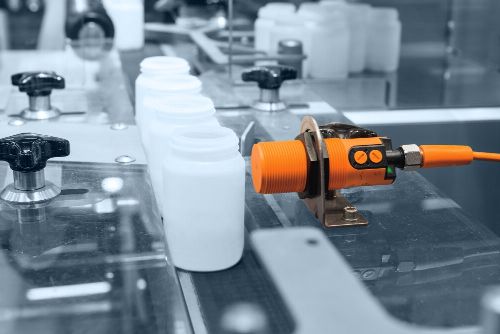
However, the global capacitive sensor market faces challenges. One significant challenge is the high cost associated with developing and implementing advanced capacitive sensor technologies, which can be a barrier for small and medium-sized enterprises (SMEs). Integrating capacitive sensors into existing systems and ensuring compatibility with other technologies can also be complex for end-users. Environmental factors such as humidity, dust, and temperature variations can affect sensor accuracy and reliability, necessitating the development of robust and resilient sensors. Addressing these challenges requires continuous research and development efforts, which can be resource-intensive.
Browse over XX market data Figures spread through XX Pages and an in-depth TOC on the “Global Capacitive Sensor Market.“@https://www.techsciresearch.com/report/capacitive-sensor-market/21881.html
Market Drivers
- Growing Adoption in Consumer Electronics
The widespread integration of capacitive sensors in smartphones, tablets, laptops, and wearable devices is a primary growth driver. These sensors enable intuitive touch interfaces, contributing to enhanced user experiences. - Rising Demand for Touch-Based Interfaces
Capacitive sensors offer reliable, fast, and responsive touch controls, making them a preferred choice in modern user interfaces across various industries, including automotive, industrial automation, and home appliances. - Advancements in Automotive Technology
Increasing incorporation of capacitive sensors in infotainment systems, keyless entry, driver assistance systems, and dashboard controls is fueling demand within the automotive sector. - Industrial Automation and Industry 4.0 Trends
Capacitive sensors are critical for precision measurement, proximity detection, and level sensing in manufacturing processes. Their role in automated and smart factories is becoming increasingly significant. - Miniaturization and Cost Efficiency
The evolution of compact, energy-efficient, and low-cost capacitive sensors has made them suitable for mass production and wide-scale deployment across various applications.
Market Trends
- Integration with IoT and Smart Devices
Capacitive sensors are becoming integral components of smart devices and IoT systems, enabling responsive and low-power interfaces in smart homes, healthcare devices, and industrial controls. - Increased Usage in Medical Devices
Capacitive sensing is being used in wearable health monitors, diagnostic instruments, and touch interfaces for medical equipment, supporting hygienic and non-intrusive interactions. - Adoption in Harsh and Challenging Environments
Modern capacitive sensors are designed to perform reliably in wet, dusty, or chemically aggressive environments, expanding their use in agricultural, marine, and industrial settings. - Multi-Touch and Gesture Recognition Capabilities
Developments in multi-touch and gesture recognition technology are enhancing the functionality of capacitive sensors, particularly in consumer and automotive applications. - Wireless and Battery-Free Innovations
Emerging technologies are enabling wireless and battery-free capacitive sensors, improving flexibility and reducing maintenance, especially in remote or embedded systems.
Based on region, North America is the fastest growing region in the global capacitive sensor market during the forecast period. North America is known for its rapid adoption of advanced technologies across various sectors, including consumer electronics, automotive, and industrial automation. This propensity drives demand for capacitive sensors used in touchscreens, proximity sensing, and other applications. The region hosts major capacitive sensor manufacturers and technology innovators, fostering a competitive environment that encourages innovation and product development. This local expertise and industry leadership contribute to market growth. High Consumer Demand: North America has a robust market for consumer electronics, where capacitive sensors are integral to touchscreens and interactive devices. The continuous demand for smartphones, tablets, wearable devices, and smart home technologies boosts the need for capacitive sensors.
Industries in North America are increasingly adopting automation and IoT solutions, driving demand for capacitive sensors in industrial applications such as manufacturing, robotics, and smart infrastructure. These sensors enable precise touch and proximity sensing in automated systems. Favorable regulatory frameworks and standards in North America support technological advancements and market growth in sectors utilizing capacitive sensors. This regulatory support encourages investment in research and development, enhancing product innovation and market penetration. The region’s strong focus on research and development, supported by government initiatives and private sector investments, accelerates technological advancements in capacitive sensor technology. This fosters a conducive environment for product innovation and market expansion. Capacitive sensors are increasingly used in medical devices and healthcare applications in North America, driven by the need for precise and reliable touch and proximity sensing in diagnostic equipment, patient monitoring systems, and medical robotics.
Key market players in the global Capacitive Sensor market are: –
- Infineon Technologies AG
- NXP Semiconductors N.V.
- STMicroelectronics International N.V.
- Texas Instruments Incorporated
- Analog Devices, Inc.
- Microchip Technology Inc.
- Honeywell International Inc.
- Omron Corporation
- Schneider Electric SE
- Pepperl+Fuchs Vertrieb Deutschland GmbH
Customers can also request for 10% free customization on this report.
Market Opportunities
- Expansion in Emerging Markets
The rise in consumer electronics and industrial automation in developing regions presents new growth avenues for capacitive sensor manufacturers looking to enter untapped markets. - Smart Home and Appliance Integration
As smart home adoption accelerates, there is a growing need for capacitive sensors in devices such as smart light switches, thermostats, kitchen appliances, and security systems. - Electric Vehicles and Autonomous Systems
The shift toward EVs and self-driving vehicles opens new opportunities for capacitive sensors in touch displays, haptic feedback systems, and advanced driver assistance technologies. - Growth in Wearable and Flexible Electronics
Capacitive sensors designed for flexible and stretchable electronics can support the expanding market for next-generation wearables, fitness trackers, and medical patches. - Advanced Human-Machine Interfaces (HMIs)
Capacitive sensors are a key component of next-generation HMIs, enabling more intuitive and responsive control systems in industrial, automotive, and consumer environments. - Customization and Modular Sensor Platforms
There is a rising demand for modular, application-specific capacitive sensor solutions tailored for unique industry requirements, offering vendors a chance to innovate and differentiate. - Government Initiatives for Automation and Digitalization
Public and private sector initiatives aimed at enhancing digital infrastructure and industrial productivity are increasing the adoption of smart sensors, including capacitive variants. - Biometric Applications
Capacitive sensors are being used in fingerprint recognition systems for mobile devices, laptops, and secure access control systems, offering a secure and user-friendly biometric solution.
Contact Us-
TechSci Research LLC
420 Lexington Avenue, Suite 300,
New York, United States- 10170
M: +13322586602
Website: www.techsciresearch.com