
Industry Key Highlights
According to TechSci Research report, “3D Printing Market Size in India – By Region, Competition, Forecast and Opportunities, 2021-2031F”, India 3D Printing Market was valued at USD 20.59 Billion in 2025 and is expected to reach USD 58.67 Billion by 2031 with a CAGR of 19.07% during the forecast period.This remarkable trajectory is driven by heightened R&D investments, increased industrial digitization, and broader adoption across automotive, healthcare, aerospace, education, and consumer electronics sectors.
Request For Sample Copy of Report For More Detailed Market insight: https://www.techsciresearch.com/sample-report.aspx?cid=14704#requestform
India is becoming a significant player in the global additive manufacturing space as both public and private sectors embrace 3D printing technologies for their flexibility, cost-efficiency, and ability to deliver complex geometries and customized solutions. Strategic initiatives such as “Make in India,” along with robust participation from educational and research institutions, are fostering an innovation ecosystem around 3D printing.
Emerging Trends in the India 3D Printing Landscape
1. Proliferation of Local Innovation Ecosystems
India is witnessing the emergence of Fab Labs, university-affiliated innovation hubs, and defense R&D units that are rapidly adopting industrial-grade 3D printers. These centers are collaborating with startups and OEMs to experiment with new materials, create intellectual property, and streamline production workflows. Over 48 high-end industrial 3D printers have been installed in 12 premier institutions and defense labs as of mid-2025, resulting in over 1,150 functional prototypes across diverse verticals.
Browse over XX Market data Figures spread through XX Pages and an in-depth TOC on ” India 3D Printing Market.” @http://Browse over XX Market data Figures spread through XX Pages and an in-depth TOC on ” India 3D Printing Market.”
2. Rise of Desktop 3D Printing for Education and Prototyping
Affordability and improved print resolution are fueling the adoption of desktop 3D printers in schools, colleges, and training institutes. This trend is nurturing a generation of students and researchers familiar with design thinking, rapid prototyping, and additive manufacturing, thus creating a future-ready workforce.
3. Smart Manufacturing and Industry 4.0 Integration
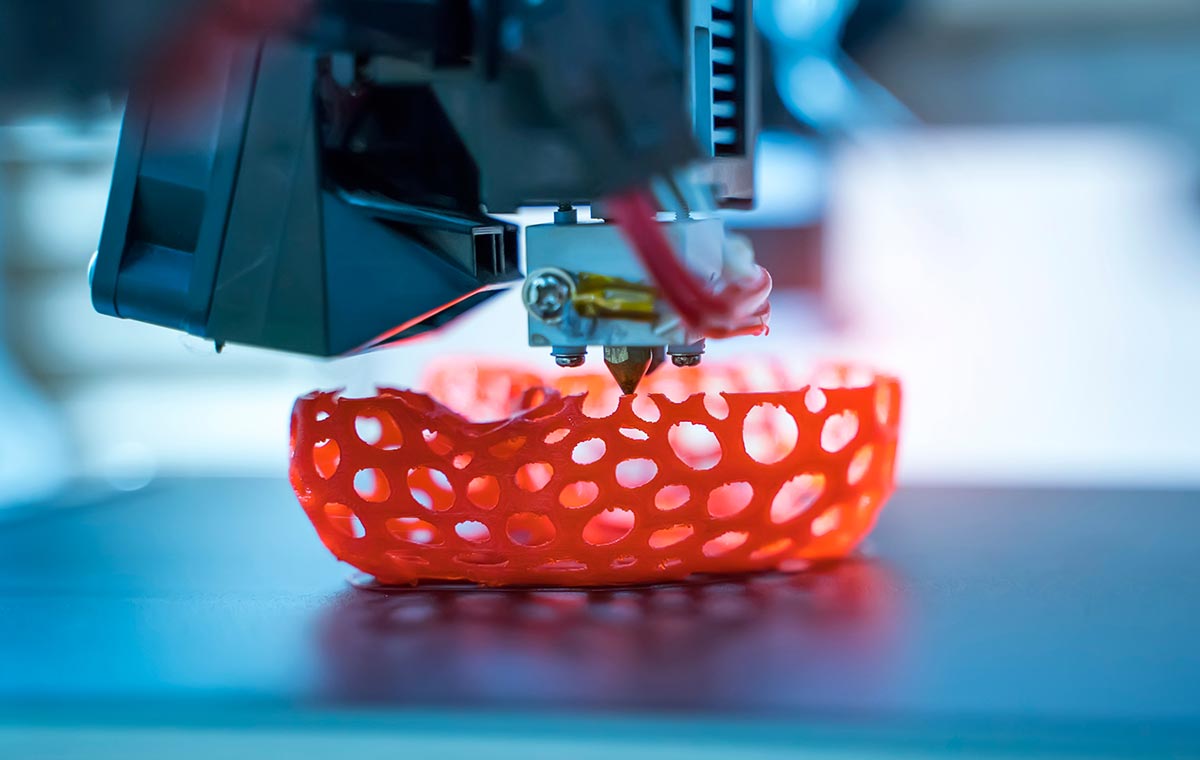
The integration of 3D printing into smart manufacturing systems has allowed industries to move toward digital twins, on-demand production, and cloud-based inventory management. Manufacturers are increasingly using additive technologies to test part performance under real-world conditions before mass production.
4. Material Diversification and Customization
The increasing availability of printable materials such as titanium, carbon fiber-reinforced polymers, ceramics, and biodegradable plastics is enabling customized applications in aerospace, medical implants, and automotive parts. These advanced materials are expanding the utility and value proposition of 3D printing.
5. Sustainable and Decentralized Manufacturing
3D printing reduces material wastage and enables localized production, minimizing transportation and inventory costs. These advantages make it a vital tool for circular economy models and decentralized supply chains, particularly relevant in rural India and Tier 2 cities.
Market Drivers
Government Initiatives and Policy Support
Programs like “Make in India,” “Startup India,” and the National Strategy on Additive Manufacturing are fostering indigenous production capabilities, offering financial incentives, and promoting local R&D efforts in 3D printing. Public sector units are integrating additive technologies into defense, railways, and aerospace projects.
Growing Industrial Applications
Prototyping, tooling, and manufacturing of functional parts using 3D printing are streamlining production timelines and reducing costs in automotive, aerospace, and healthcare industries. Businesses are leveraging these advantages to gain faster time-to-market and competitive differentiation.
Technological Advancements
Continuous improvements in printer resolution, build volume, material compatibility, and software automation are making 3D printing more reliable, precise, and scalable. The emergence of hybrid machines that combine subtractive and additive processes is further enhancing industrial adoption.
Increasing R&D Investments
Leading educational institutions, research labs, and startups are investing heavily in material sciences, process engineering, and post-processing technologies to develop advanced applications of 3D printing. These investments are resulting in the creation of unique intellectual property and patented processes.
Demand for Customization and Personalization
From bespoke medical implants to customized automotive interiors and personalized consumer goods, the demand for tailor-made products is driving the need for flexible, on-demand production—an area where 3D printing excels.
Competitive Analysis
The India 3D Printing Market features a mix of global technology leaders and agile domestic startups, all vying to capitalize on the country’s growing demand for additive manufacturing.
Key Players
- Stratasys Ltd.: A global pioneer in polymer-based 3D printing, active in India with solutions in healthcare, aerospace, and prototyping.
- 3D Systems Corporation: Offers industrial printers, software, and services for production and prototyping.
- HP Inc.: Known for its Multi Jet Fusion technology, widely used in manufacturing and education sectors.
- Materialise NV: Specializes in software solutions and additive manufacturing services.
- EOS GmbH: A leader in metal additive manufacturing, with applications in high-performance sectors.
- Desktop Metal Inc.: Gaining traction with cost-effective metal printing solutions for SMEs.
- SLM Solutions Group AG: Focused on selective laser melting for high-precision metal parts.
- Ultimaker BV: Prominent in the desktop printing segment, particularly for education and rapid prototyping.
Competitive Landscape Insights
- Companies are entering strategic collaborations with academic institutions to co-develop curriculum and skill development programs.
- Joint ventures with Indian manufacturing firms are expanding access to domestic markets.
- Product innovation around print speed, accuracy, and cloud-based software integration is a key differentiator.
Regional Insights
North India
North India leads the 3D printing market in India, driven by an ecosystem of engineering institutions, industrial hubs, and government support. Delhi NCR, Chandigarh, and Lucknow are emerging as centers of additive manufacturing excellence.
West India
States like Maharashtra and Gujarat are adopting 3D printing in automotive and defense applications. Mumbai and Pune are particularly active in prototyping and functional part production.
South India
Bengaluru, Hyderabad, and Chennai house major tech parks and startups leveraging 3D printing in aerospace, education, and R&D. Government policies in Telangana and Tamil Nadu are promoting innovation in this space.
East and Central India
While still nascent, states like Odisha and Madhya Pradesh are witnessing growth in educational and industrial 3D printing initiatives, supported by digital skilling missions and incubators.
Also Read:
India RF Components Market Report
India Online Learning Market Report
Future Outlook
The future of 3D printing in India is extremely promising, with its role expanding from prototyping to full-scale production. With advancements in AI-powered design tools, AI-ML algorithms for process optimization, and the emergence of bio-printing, India is well on its way to becoming a global hub for additive manufacturing. The increasing integration of 3D printing into aerospace, defense, and healthcare will continue to create new opportunities.
As hardware becomes more affordable and software more intuitive, the barriers to entry will reduce, enabling MSMEs and even artisans to leverage 3D printing. Future policy support, especially around intellectual property, local manufacturing incentives, and R&D grants, will further catalyze growth. Decentralized manufacturing using 3D printing will also play a vital role in India’s sustainability journey.
10 Benefits of the Research Report
- Comprehensive Market Sizing: Detailed current and projected market size from 2025 to 2031.
- Segmental Insights: Breakdown by application, component, printer type, and region.
- Trend Analysis: In-depth exploration of emerging technologies and applications.
- Competitive Landscape: Profiles of major players, their strategies, and market share.
- Investment Opportunities: Identification of high-potential growth segments and regions.
- Government Policy Mapping: Assessment of supportive schemes and initiatives.
- Technological Evaluation: Insights on innovations in hardware, materials, and software.
- Consumer Behavior Analysis: Trends in user adoption across industries.
- Barriers and Challenges: Discussion of adoption hurdles and potential solutions.
- Strategic Recommendations: Actionable guidance for investors, manufacturers, and policymakers.
Customers can also request 10% free customization on this report.
Conclusion
India’s 3D printing market stands at the intersection of innovation, digital transformation, and industrial modernization. Fueled by technological advancements, increasing public-private collaboration, and growing demand for personalized, cost-effective manufacturing solutions, the market is set to play a pivotal role in shaping India’s future industrial landscape. As the country transitions toward Industry 4.0, 3D printing is no longer a futuristic technology but a practical, essential tool for progress.
By strategically harnessing this potential and nurturing talent, infrastructure, and policies, India can not only meet its domestic manufacturing goals but also emerge as a competitive player on the global additive manufacturing stage.
Contact US:
Techsci Research LLC
420 Lexington Avenue, Suite 300,
New York, United States- 10170
Tel: +13322586602